Executive chef
Leads the menu, the standard and the kitchen. Chosen for the destination and the family, not assigned from a rota.
Experiences / Culinary
The food is not an amenity attached to the trip. On most KCT journeys it is the reason the trip works.
Not a chef agency
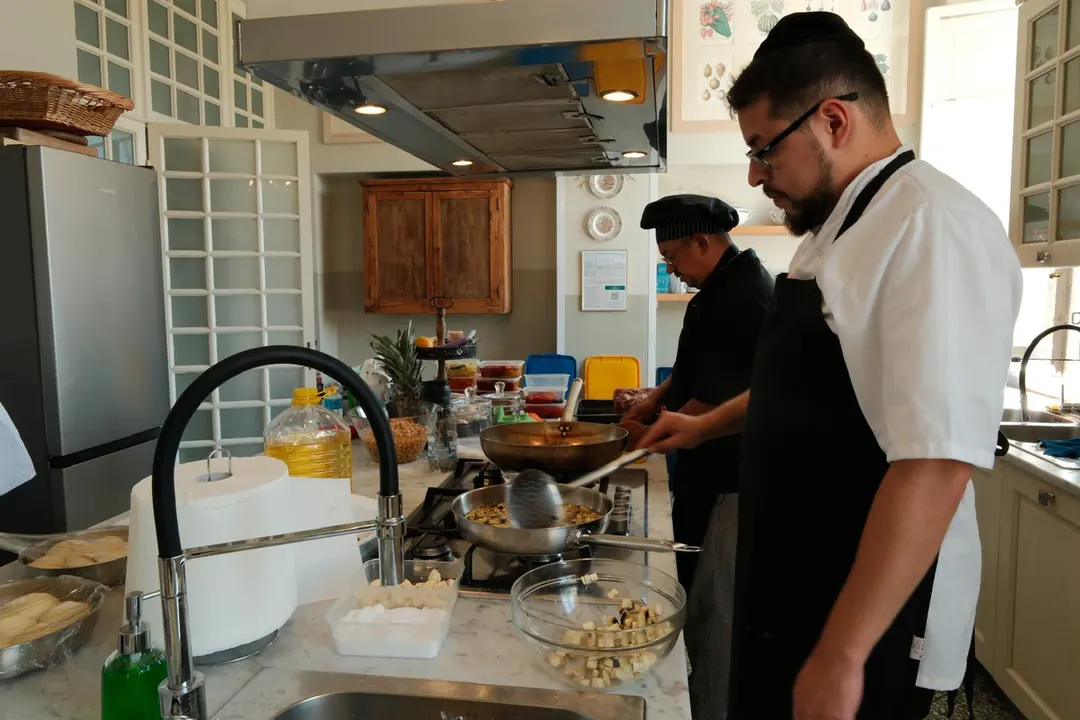
We are not a private-chef agency. We build and run a culinary operation inside a journey we are already producing.
That distinction changes everything downstream. The chef is chosen after we know the property, the group and the route. The menu is developed against what can actually be bought within an hour's drive. The kitchen is surveyed before it is promised, and if it cannot be made to work, we build a second one.
Kosher travel usually fails at the supply chain, not at the stove. So we treat provisioning as a logistics problem with a deadline, which is what it is.
The brigade
Leads the menu, the standard and the kitchen. Chosen for the destination and the family, not assigned from a rota.
Sized to the group and the programme. A week for twenty-four with a Yom Tov in it is a different brigade from a villa week for eight.
Present where the standard requires it, briefed on the family's practice, and part of the team rather than an inspector visiting it.
Front of house, butlers and stewardesses — attentive without being intrusive, which is the harder of the two.

Kitchens & provisioning
Almost no beautiful property has a kitchen ready to cook for twenty under supervision. The work happens weeks before anyone arrives.
Dining
Most nights. One long table, courses that keep coming, and nobody looking at a menu.
What was at the market that morning, cooked properly. This is the whole point of eating in Tuscany, or the Cyclades, or Provence.
The meals the week is actually built around. Planned first, and given the most kitchen capacity.
Children eat differently and earlier. We plan for it rather than treating it as an interruption.
Galley-scale cooking that does not taste like galley cooking. Menus built around resupply points and sea state.
Plated, family-style or stations, for twenty or two hundred, at the same standard as the family table.
Begin
Tell us the destination, roughly when, and who is travelling. We read every enquiry ourselves and reply within a few hours.
Prefer the full brief?Also — private kosher catering in Miami. chefaleh.com ↗
© 2026 Kosher Culinary Travel · Website by DanDev
© 2026 Kosher Culinary Travel
We use Google Analytics to understand how visitors use this site. It sets cookies and is only loaded if you agree. See our privacy policy.